



How to Sell Your Caravan for the Best Result: Prep Checklist and Your 3 Options
The three main ways to sell a caravan or motorhome in Australia are privately, as a trade-in, or on consignment through a dealer. Private sales can return the most but cost you the most time and effort. A trade-in is the quickest. Consignment sits in the middle: the dealer markets and handles enquiries for you while you wait for the right buyer. Whichever you choose, a clean, well-documented, honestly-described van sells faster and for more.
Whether you’re upgrading, downsizing or hanging up the tow rope, the way you sell matters as much as the van itself. Here’s what we’ve learned from helping caravan and motorhome owners across Bundaberg and the Wide Bay sell their vans.
Your three options compared
| Private sale | Trade-in | Consignment | |
|---|---|---|---|
| Speed | Depends on the market and how well you advertise | Fastest | Depends on the market, but handled for you |
| Effort from you | High: photos, ads, calls, inspections, paperwork | Low | Low: you supply the details, the dealer does the rest |
| Likely return | Potentially the highest, if you do it well | Usually lower, for the convenience | Between the two |
| Tyre-kickers and time-wasters | You deal with all of them | None | The dealer filters them |
| Best for | Owners with time and sales confidence | Buying another van straight away | Owners who want a good result without the hassle |
There’s no single right answer. If you’re buying another van from the same dealer, a trade-in keeps things simple. If you want to avoid strangers inspecting your van on weekends, consignment is worth a conversation. You can read more in our posts on how caravan consignment works and selling on consignment in three easy steps.
The 10-point prep checklist that makes buyers say yes
Buyers decide quickly. These steps cost very little, but they change how your caravan or motorhome is perceived.
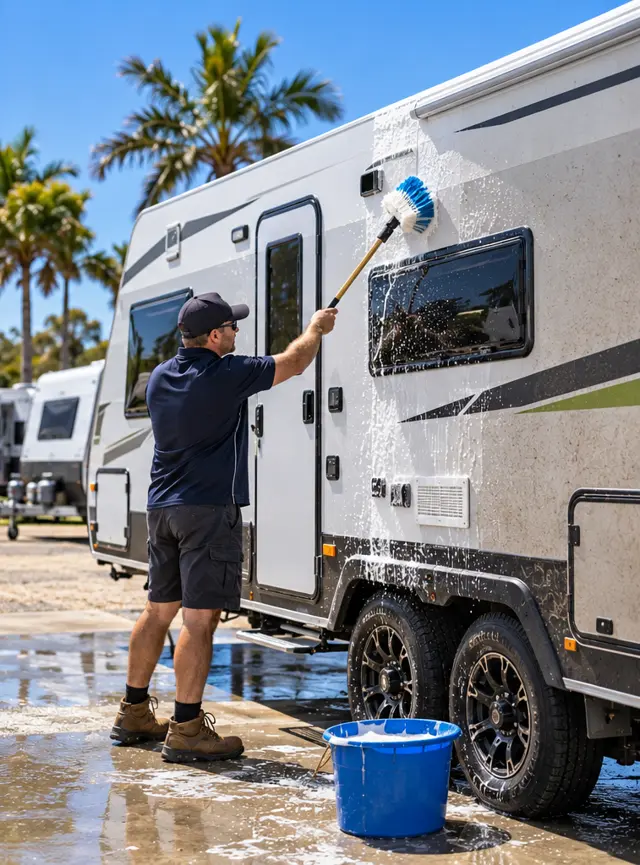
- Clean it properly. Roof, awning, inside the cupboards, under the bed, the oven, the fridge. A buyer who sees a spotless van assumes it’s been looked after.
- Empty it out. Remove personal items, spare gear and anything you won’t be selling with the van. Space sells.
- Fix the small things. A sticky drawer, a dripping tap, a blown globe. Minor faults make buyers wonder about major ones.
- Get it serviced. A recent service with receipts is one of the strongest selling points. Our workshop can do this before you list.
- Gather your paperwork. Service history, manuals, warranty documents, registration and the compliance plate details.
- Check the tyres, bearings and brakes. Buyers will look, and they’ll negotiate on anything worn.
- Test everything. Gas, 12V, 240V, hot water, fridge, aircon, lights, awning, slide-outs. Be able to show it all works.
- Write down your upgrades. Solar, lithium batteries, a new toilet, water filters, suspension, tow hitch. List them with dates.
- Know your weights. Be ready to tell a buyer the tare, ATM and tow ball weight. See our towing weights guide.
- Be honest. Disclose known issues up front. It builds trust and prevents deals falling over at inspection.
Photos and descriptions that get enquiries
Most buyers meet your van online first. A few simple rules will put you ahead of most listings:
- Shoot in good light, early or late in the day, on a level, uncluttered background.
- Show the outside from all four corners, then every interior space, the bathroom, kitchen and bed, plus the storage.
- Include the details that matter: the fridge, the battery set-up, the water tanks, the underside.
- Write a title that says what it is: make, model, year and layout.
- Lead the description with what makes the van special, then list the specs.
- Give accurate weights, accurate dimensions and an honest account of condition.
Pricing tip
Look at comparable vans actually listed in your area, not just what you paid or what you hope to get. A van priced at the market gets enquiries in the first fortnight, when interest is highest. One priced too high tends to sit and go stale.
Paperwork you need to sell a caravan or motorhome in Queensland
Requirements vary by state and change from time to time, so always check with the Queensland Government or your dealer. In general, you should have the registration details, evidence that the caravan has no money owing on it, and a written receipt or contract of sale. It’s worth confirming the current requirements for transfer of registration and any roadworthy or safety certificate rules before you list.
Why consignment suits a lot of owners
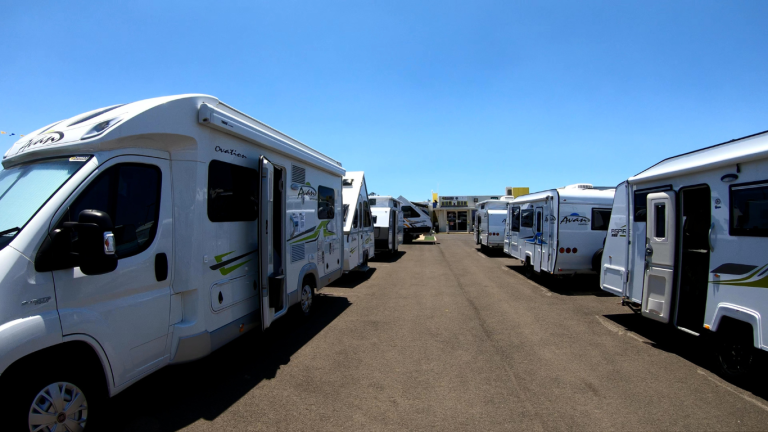
With consignment, the van stays with you or in the yard, and the dealer does the selling. Based on how we run it at Searle’s:
- Contact us. Fill in the enquiry form or call.
- Give us the details. We take you through a series of questions so we can describe your van properly.
- Sit back. We list it on the web, across socials and in the yard, and handle the enquiries.
Mistakes that cost sellers money
- Selling dirty. It’s the easiest fix and the most commonly skipped.
- Hiding faults. They will be found at inspection, and the negotiation turns sour.
- Using poor photos. Dark, cluttered or too few images mean fewer enquiries.
- Over-pricing. It’s tempting. It rarely works.
- Letting the van sit unused. Seals dry out, batteries go flat and mould appears. Keep it ticking over.
- Skipping insurance. Keep cover until the van is gone and the paperwork is done.
Frequently asked questions
It depends on your priorities. A private sale can return the most but takes the most time. A trade-in is quickest. Consignment through a dealer is a middle option where the dealer handles marketing and enquiries for you.
You contact the dealer, give them the details of your van, and they list it online, on social media and in their yard, then handle enquiries until it sells.
Clean it thoroughly, fix small faults, service it, gather your paperwork, test every appliance and take good photos. A recent service history is one of the strongest selling points.
Rules differ by state and change over time. Check with the Queensland Government or your dealer for the current requirements before listing.
If speed and convenience matter most, a trade-in is simplest. If you want the highest possible return and have time to spare, a private sale may suit you. Consignment sits between the two.
Yes. We sell caravans, campers and motorhomes on consignment from our Bundaberg yard. Contact us to get started.
Thinking of selling your caravan or motorhome?
Tell us about your van and we’ll talk you through the options, with no pressure.
Start the conversation or call 07 4151 3000