




Inside Willow RV: Our Pick for Australia’s Best-Built Caravan
The best parts of a Willow RV are the ones you can’t see: what’s inside the walls, how the body is joined, and what’s under the floor. That’s why we back Willow RV.
Willow RV caravans are Australian-built in Pakenham, Victoria. The company was founded in 2017 by Ian Jow and Eddie Wills, who between them have more than 50 years in RV design and manufacturing. This is how their caravans are built, and why.
Why Willow RV builds this way
Every decision in a Willow RV comes back to five things.
- Strength. The floor, walls, roof and furniture are bonded and fixed together into one body, and that body is tied to the chassis. Every part shares the load, so nothing is left to carry it alone.
- Less weight. Composite panels are very strong for what they weigh. Weight saved in the body goes back to you as payload: water, gear, batteries and extras.
- Insulation. One-piece panels with a closed-cell extruded foam core, no wiring channels cut into them, and double glazed windows. The van holds its temperature, so the air conditioner works less.
- Keeping water out. One-piece panels mean fewer joins to seal. The joins that remain are rebated and sealed with three types of seal, and the rails and extruded foam inside the walls can’t absorb water.
- Precision. Every panel is machine cut from the same 3D model, so each van goes together the same way, every time.
Polyurethane rails inside every wall
Each Willow RV wall is a one-piece, aluminium-skinned composite panel with a polyurethane rail system built into it. In all our years in the industry, we have never seen another caravan built with a rail system integrated into its composite wall.
The rails are the backbone of the wall. Polyurethane can’t absorb water, and the high density extruded foam is a closed-cell type that can’t absorb water either. The rails are placed exactly where the furniture meets the wall, so every cabinet fixes into something solid.
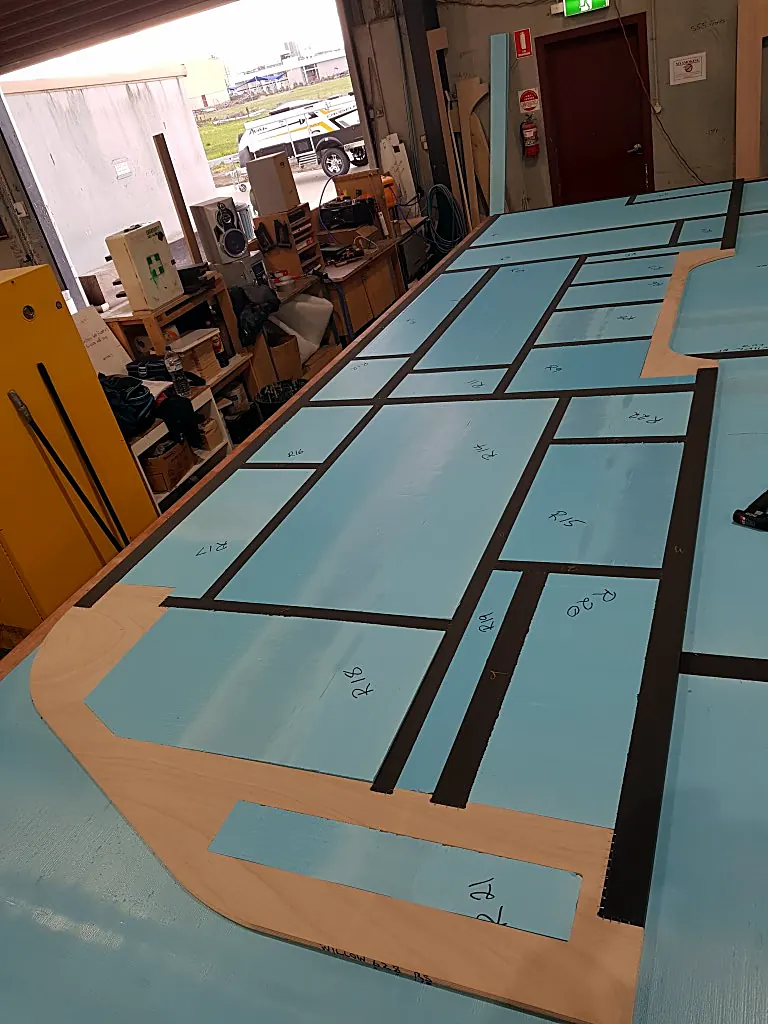
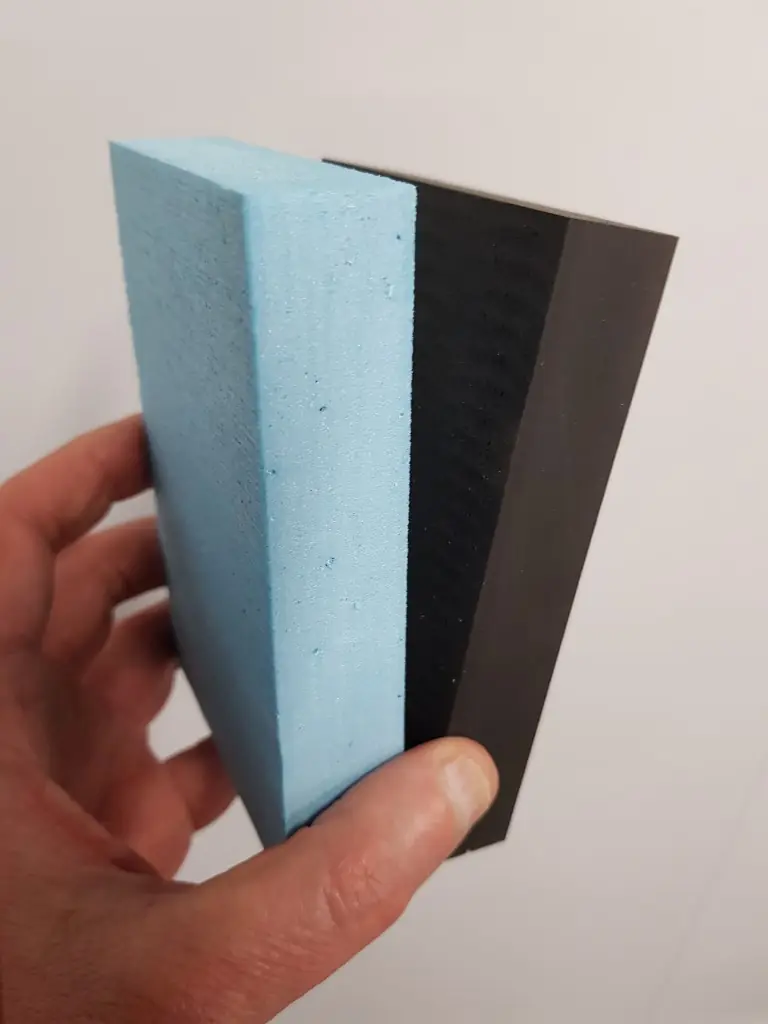
The walls and roof are each one piece, 30mm thick, and the windows are double glazed. The result is a fully insulated van that’s easier to keep cool in summer and warm in winter.
The wall panels are made here in Australia, not imported, and they are designed and manufactured for our harsh conditions. The outer skin is painted aluminium, not fibreglass, so it doesn’t yellow, go dull or develop the fine surface cracks that fibreglass can after years in the sun.
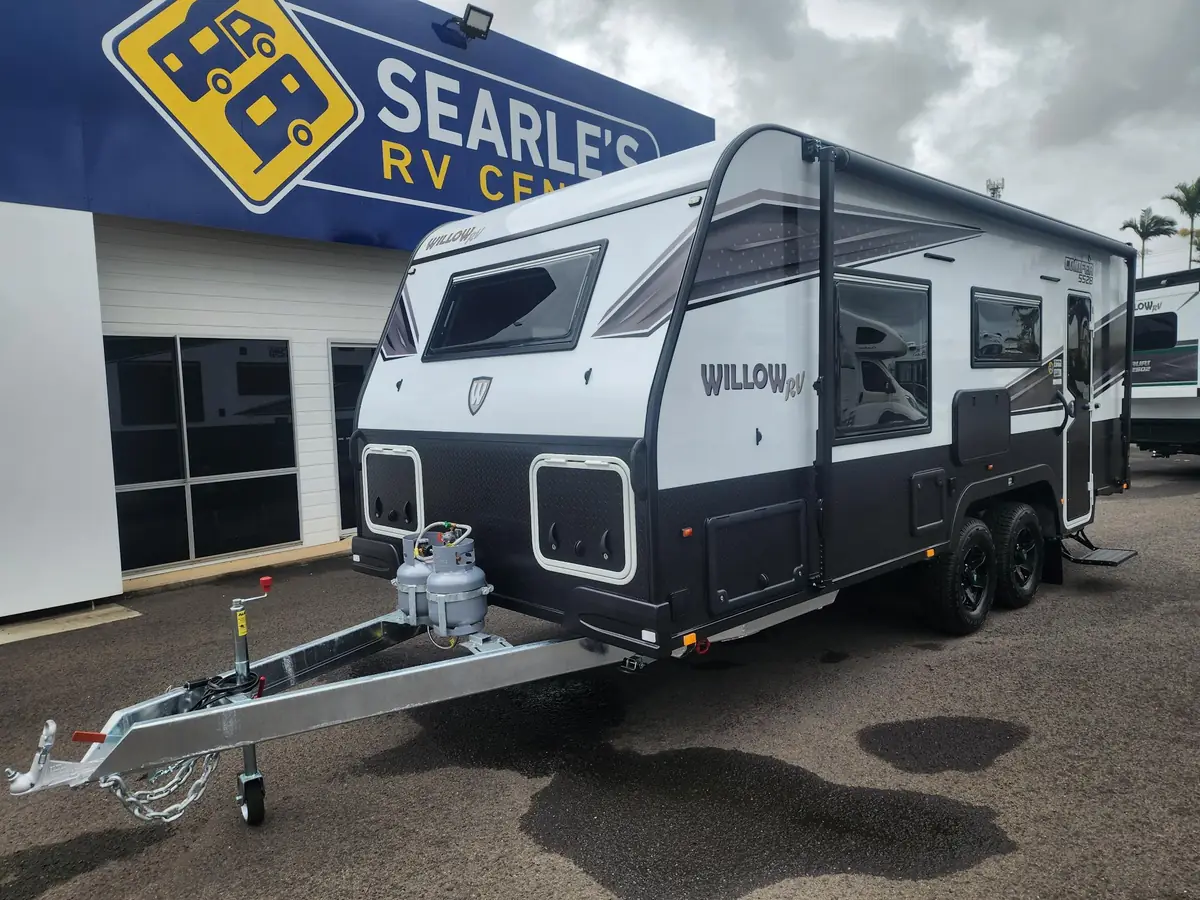
Walk-throughs at Searle’s RV Centre, Bundaberg.
Three types of seal at every corner
The roof-to-wall join is where water most wants to get in, so it gets the most attention. The wall is rebated into the roof, so the two panels lock together before any sealant goes on. The join is then protected by three types of seal across four sealing surfaces: silicone over the join, butyl tape in two layers, and a rubber extrusion, all clamped down under the aluminium corner cap.
The whole body is sealed before the corner mouldings are fitted. The walls are fixed to the floor, and the roof to the walls, every 200mm.
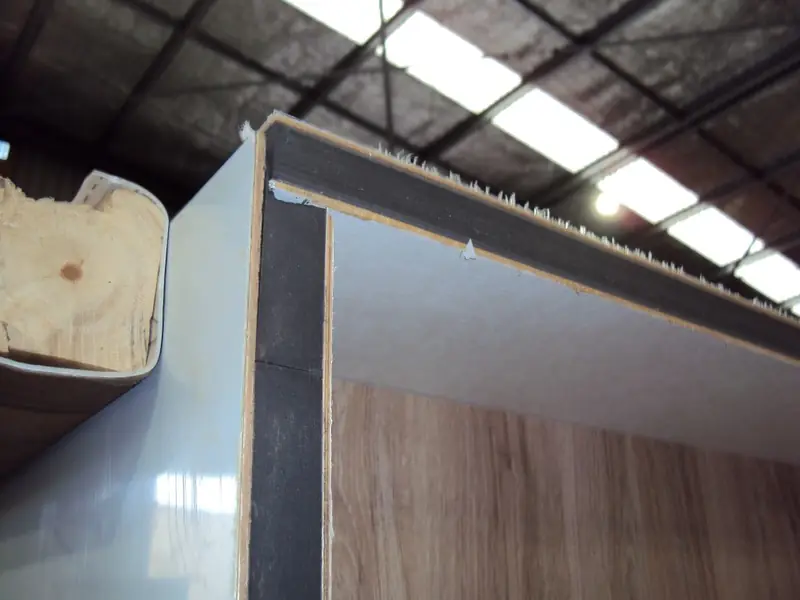
For comparison, this is how a conventional timber-framed corner is typically sealed: sheet cladding fixed to a timber frame, with a small aluminium J mould over the join and silicone underneath as the only seal. That J mould covers about 25mm by 12mm.
The Willow RV corner cap is 45mm by 25mm, close to twice the cover on each face, and it clamps down over three types of seal: silicone, two layers of butyl tape and a rubber extrusion.
A hot dipped galvanised chassis
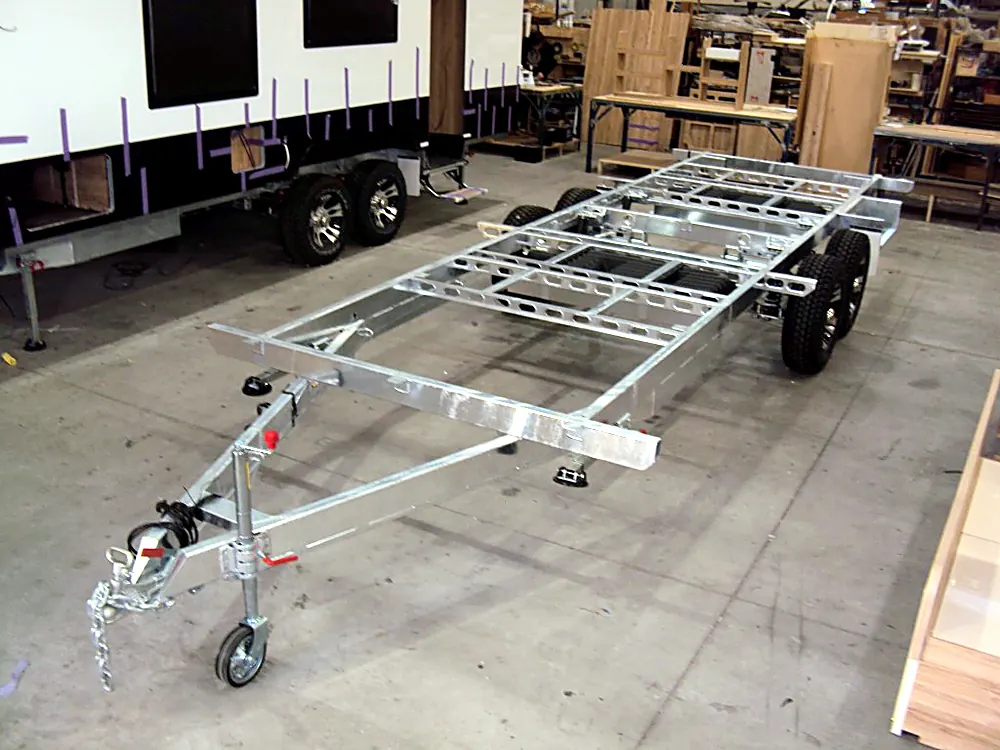
The chassis is designed by Willow RV, built from Australian steel and hot dipped galvanised, not painted.
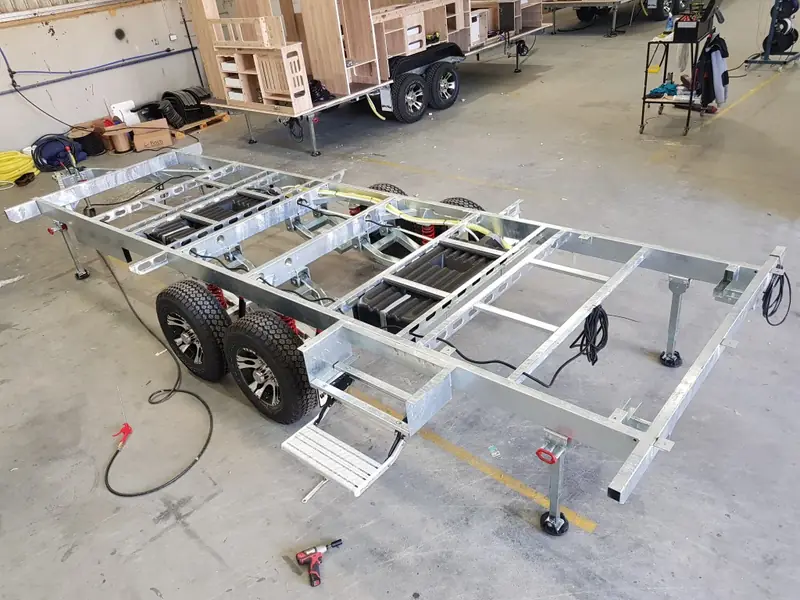
Hot dipped means the galvanising happens last. The chassis is fully fabricated first. Then the whole frame is chemically cleaned and lowered into a bath of molten zinc.
For those who like the detail
- The zinc becomes part of the steel. In the bath, zinc reacts with the iron in the steel and forms zinc-iron alloy layers. It is a metallurgical bond, not a film sitting on the surface.
- Every surface is covered. The finished frame is fully immersed, so zinc reaches every weld, edge and corner, and the inside of the hollow sections, where moisture sits and rust normally starts out of sight.
- It protects itself when it is damaged. Zinc corrodes in preference to steel. If a stone chip exposes a small patch of bare steel, the zinc around it goes on protecting it. Paint can only act as a barrier, so once it chips, rust starts and creeps underneath.
- It is tough. The alloy layers resist abrasion from gravel, sand and corrugations far better than a paint film.
- It is thick, and thickness is life. Dipping a finished frame leaves a heavier zinc coating than galvanising applied to steel before fabrication, and the life of a galvanised coating is directly proportional to its thickness.
All that zinc adds weight to a chassis. Willow RV’s light composite body is what makes room for it, so you get maximum protection underneath without giving up payload.
As a guide, a 20′11″ off road Willow RV usually has a tare weight of around 2,430kg and an ATM of 3,200kg, with the option to upgrade to 3,400kg. That is close to a tonne of payload. Weights vary with model and options.
The chassis also has four positions for the water tanks. Two 95 litre fresh water tanks are standard, placed to suit each layout for stable towing, with a grey water tank as an option. AL-KO independent coil suspension is standard, with AL-KO Enduro X on off road models.
A one-piece honeycomb floor and a roof with no joins
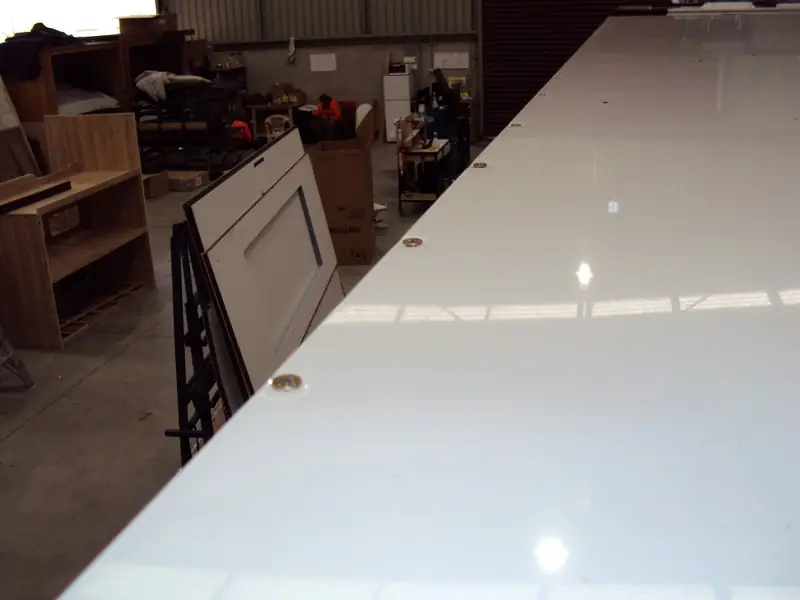
The floor is a one-piece honeycomb panel: strong, light and waterproof. The roof is one piece too, with no joins across it. The roof is strong enough to walk on and the shell is hail resistant.
Built inside out
A Willow RV is built from the inside out. Willow RV has built this way since its first van in 2017. It was unusual then, and we’re now seeing other builders follow, because it is a better way to build.
The furniture is fixed to the floor first. With the van still open, plumbers and electricians run everything from the outside. Only then do the walls and roof go on. Fewer people climbing through the van during the build means less chance of damage before you ever see it.
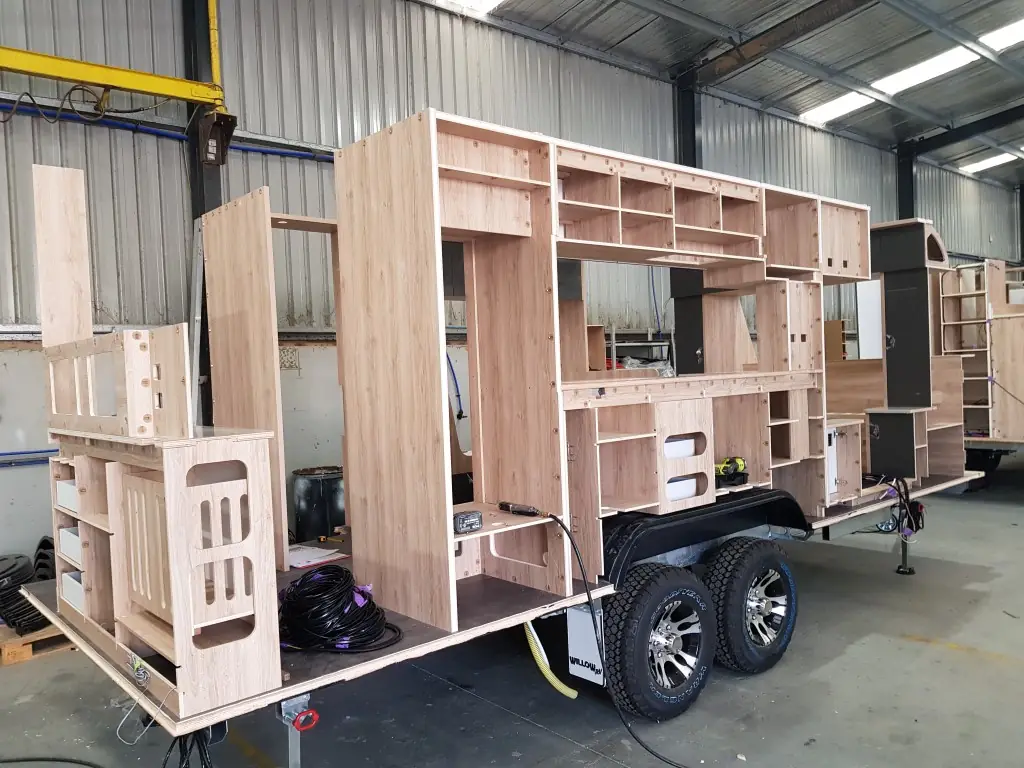
Building inside out doesn’t lock anything in. The furniture and fittings are designed so they can still be taken out from inside the finished van if a repair ever calls for it.
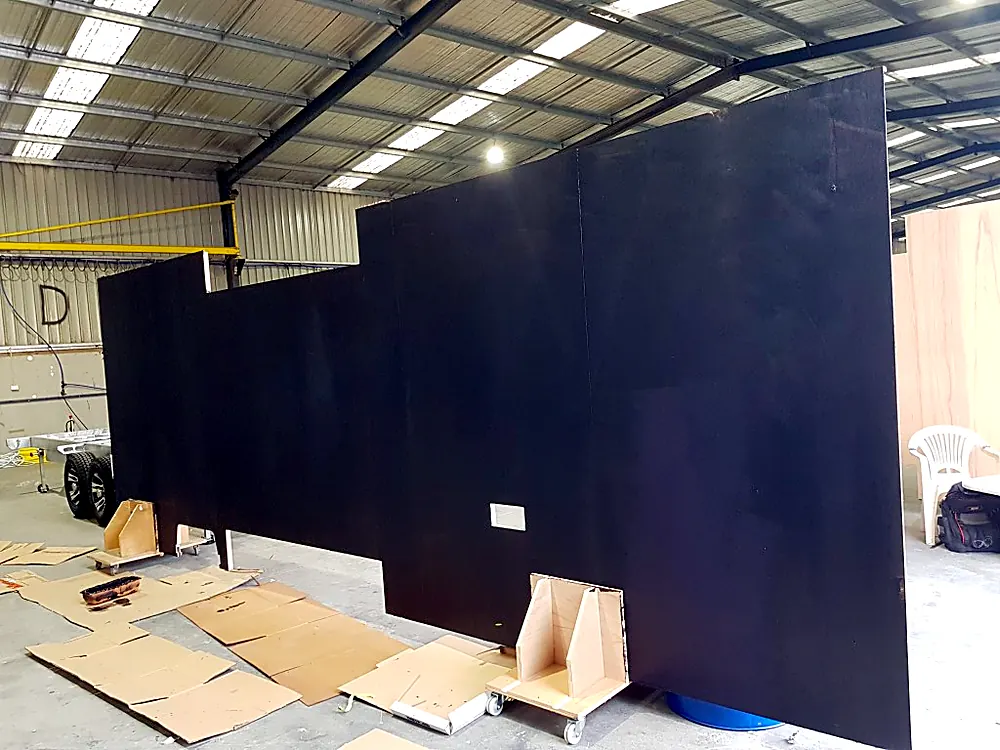
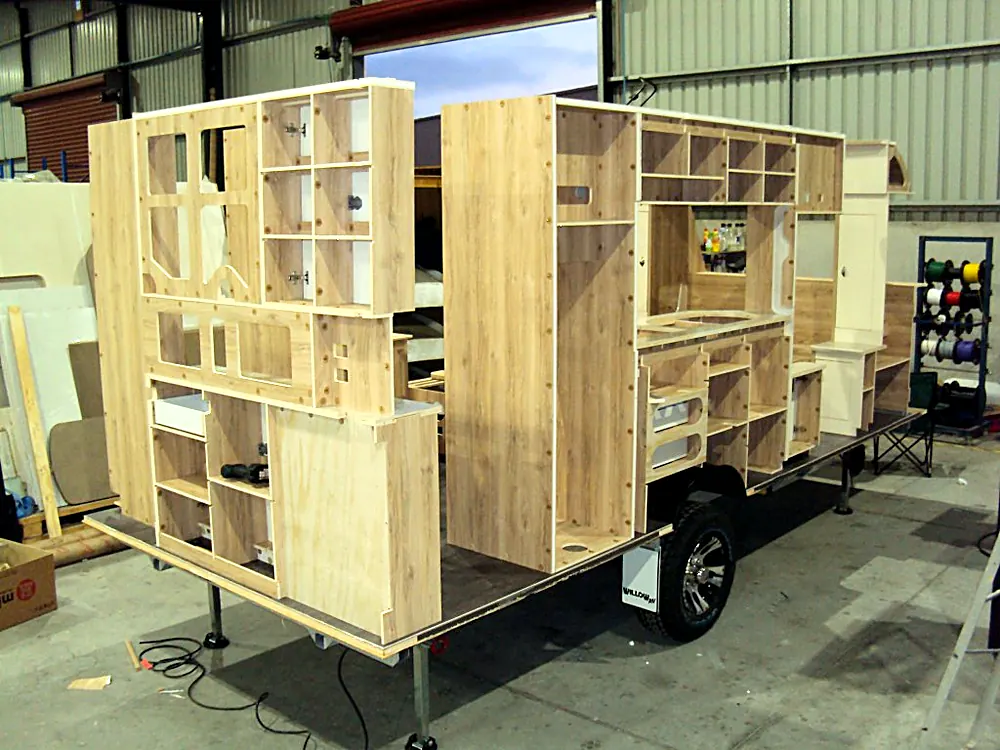
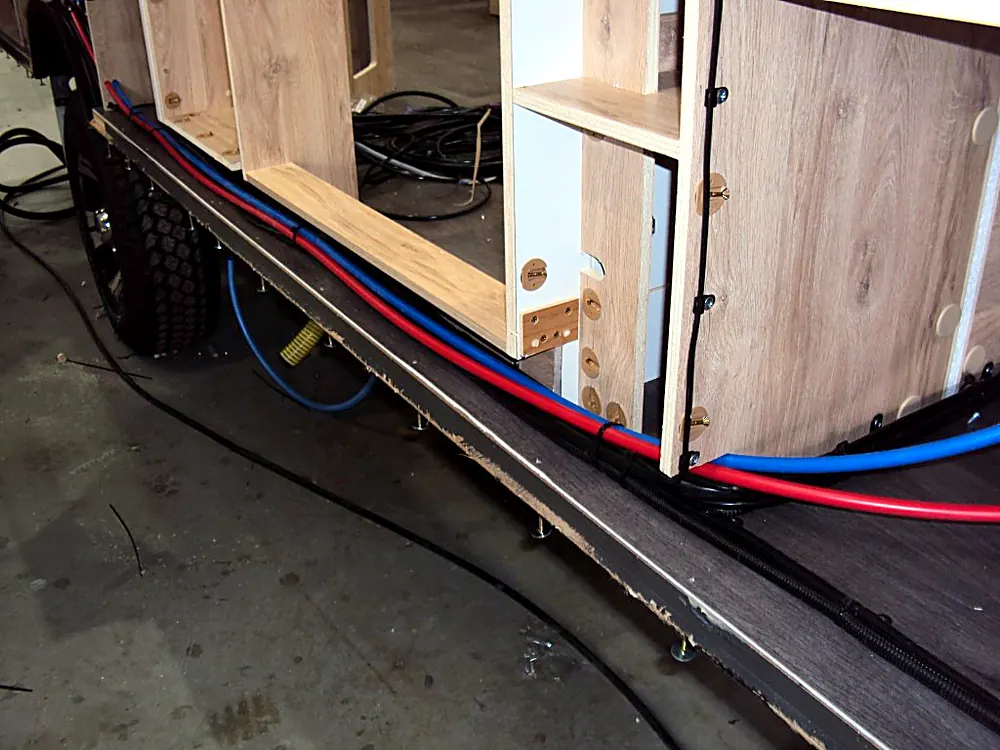
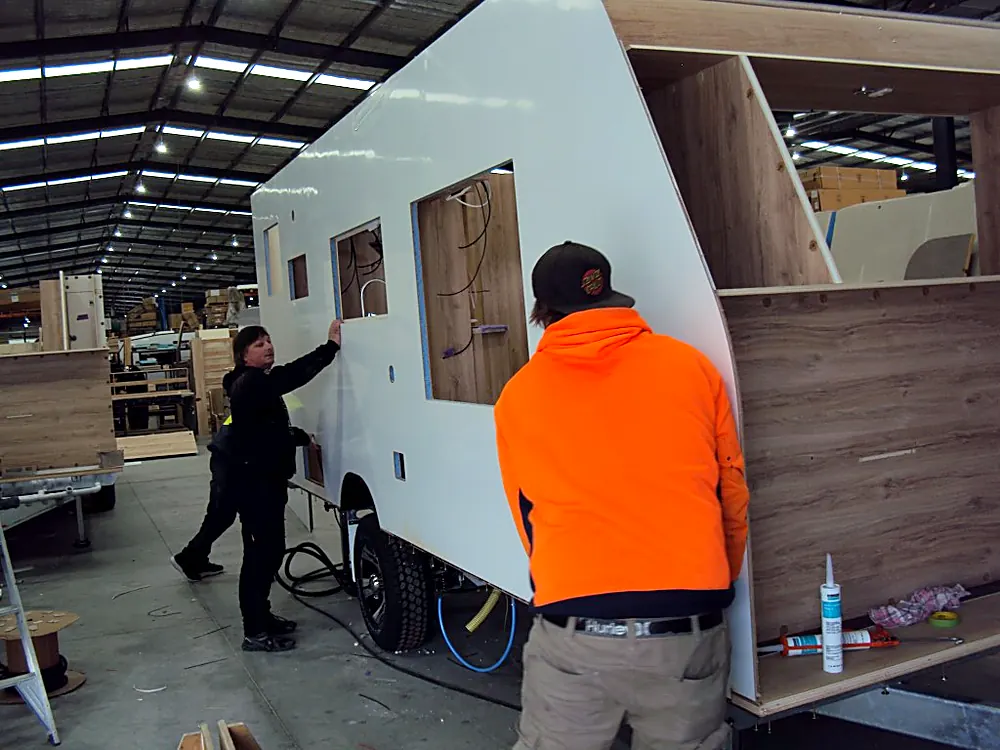
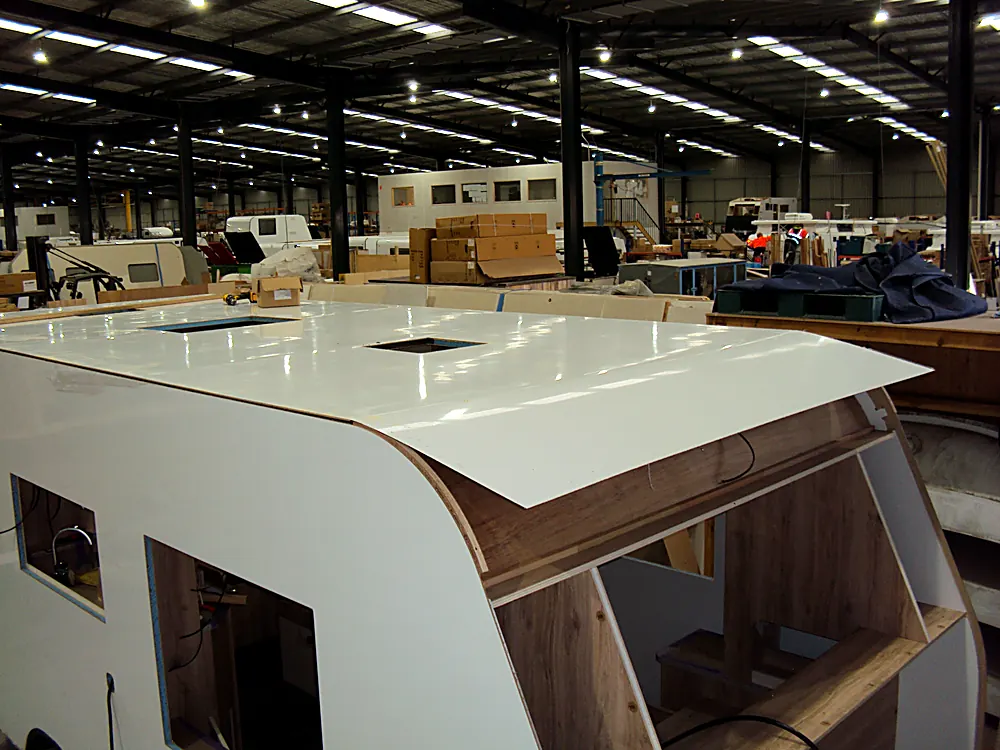
No wiring in the walls
The wiring and plumbing run through the furniture, in pathways cut for them at the factory. Nothing is buried in a wall.
That matters twice. The insulation is never cut into, so it does its job. And if there’s ever a fault, the wiring can be reached from inside the van.
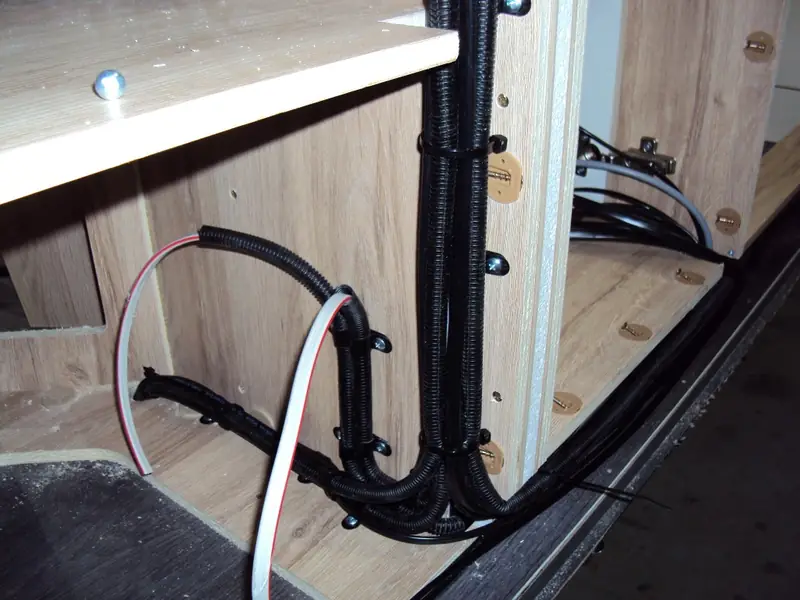
Designed in 3D, cut by CNC
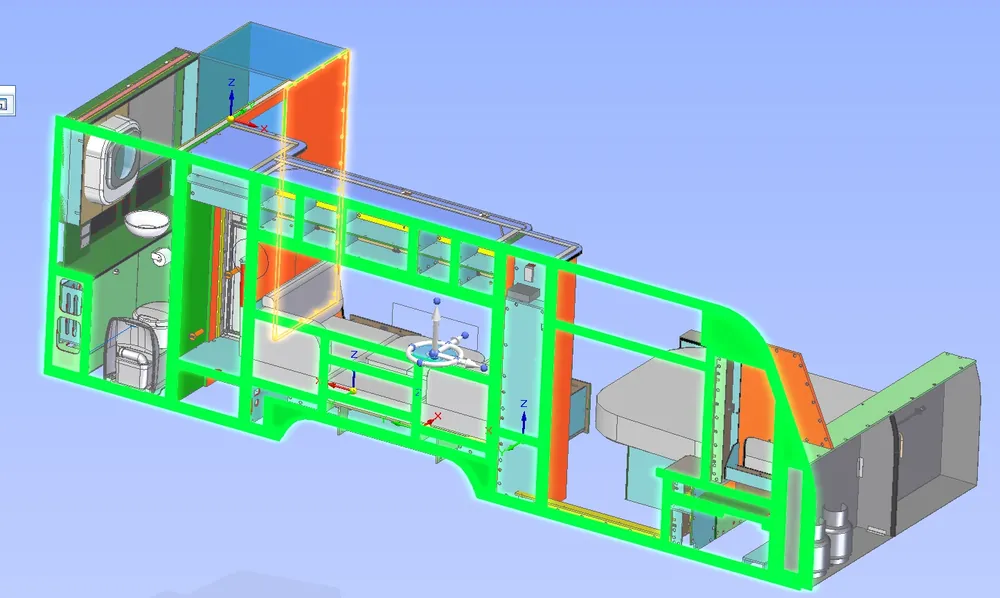
Every Willow RV is modelled in full in 3D computer-aided design before anything is cut: the chassis, the body, the furniture and every fitting. Analysis software is used at the design stage, which is how details like tank positions and weight balance are worked out before the first van is built.
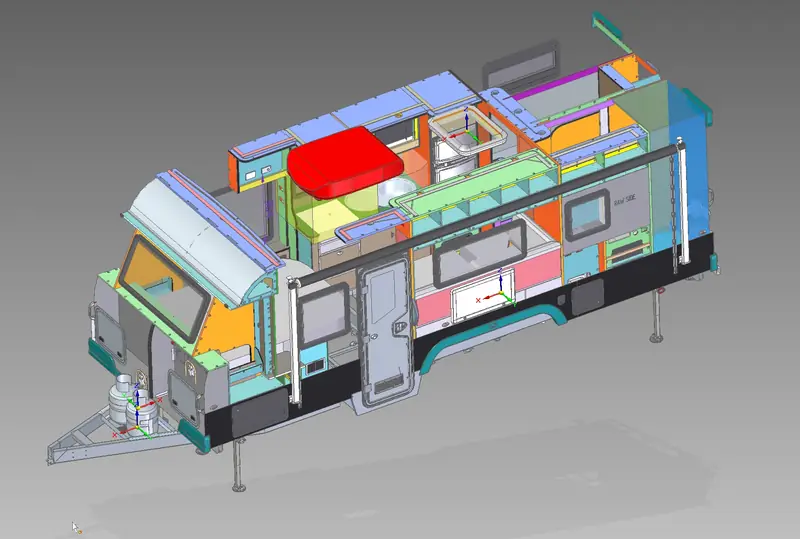
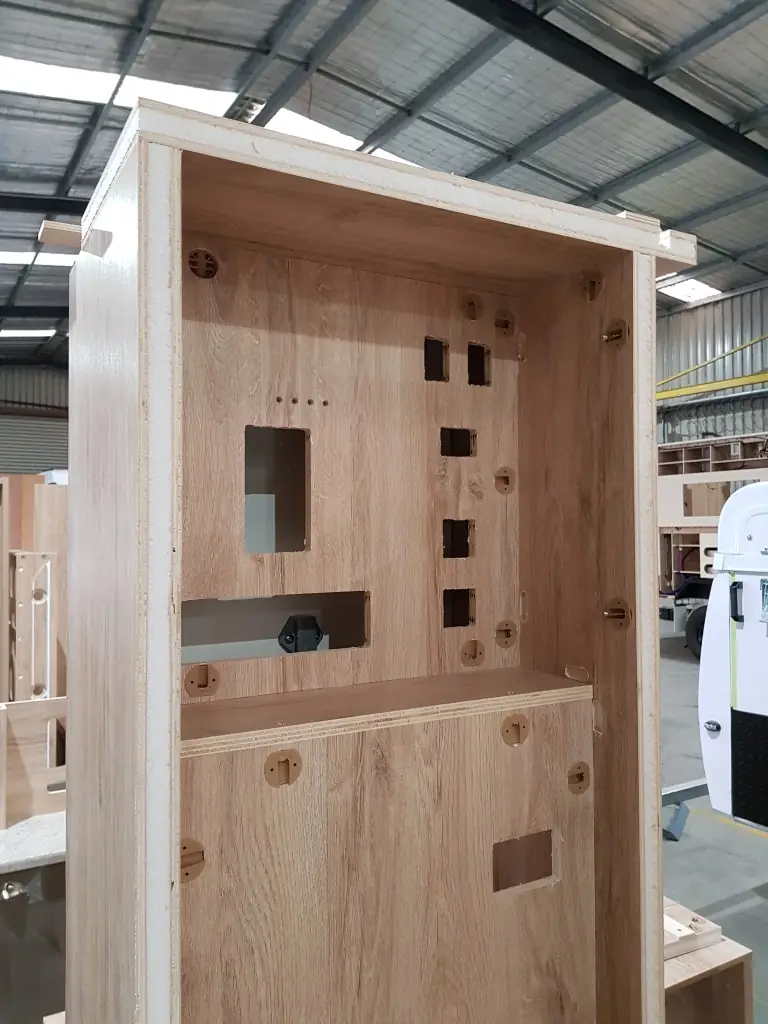
The walls, floor, roof and furniture are then cut on CNC (computer numerically controlled) machinery, straight from that model. Every slot, cut-out and wiring pathway is machined to the exact dimensions in the 3D model. Panels interlock one way only, so there are no tape measures and no hand-cut holes on the production line.
The furniture is CNC-cut and interlocking. Each panel locks into the next, so its strength doesn’t rely on screws alone, and only the right panel fits in each place. The furniture locks into the floor and the walls and becomes part of the van’s structure. It’s light too, which leaves more of your payload for the things you want to take.
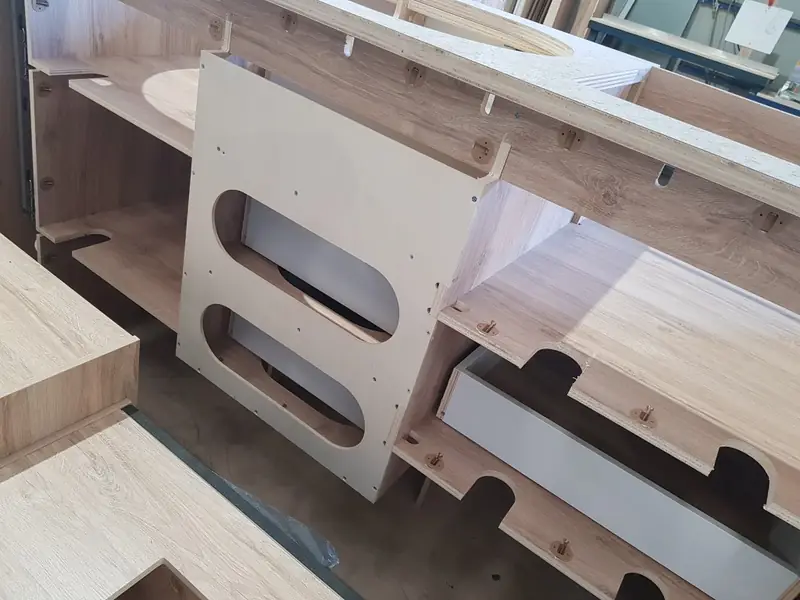
Tested and weighed, every van
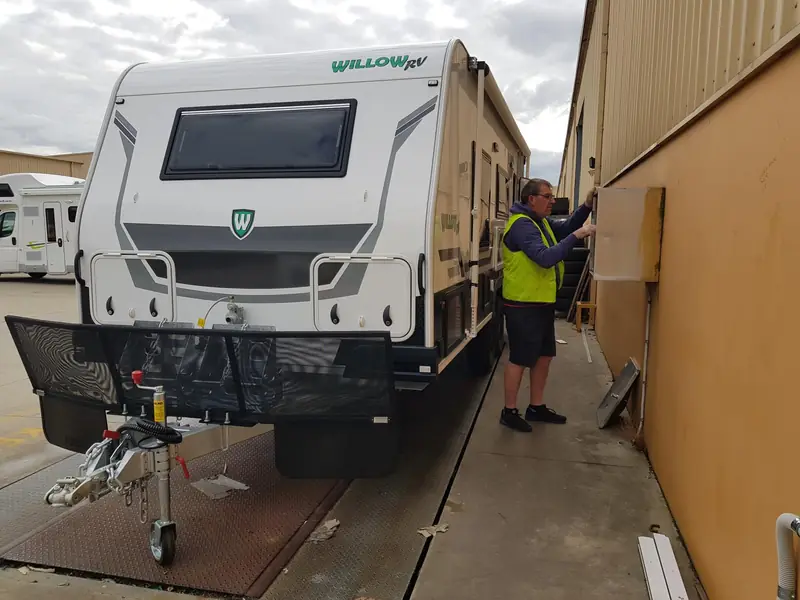
Before a Willow RV leaves Pakenham, every system, appliance and fitting is tested, and the van is weighed. You know what your van weighs because it has been on the scales.
The Willow RV range
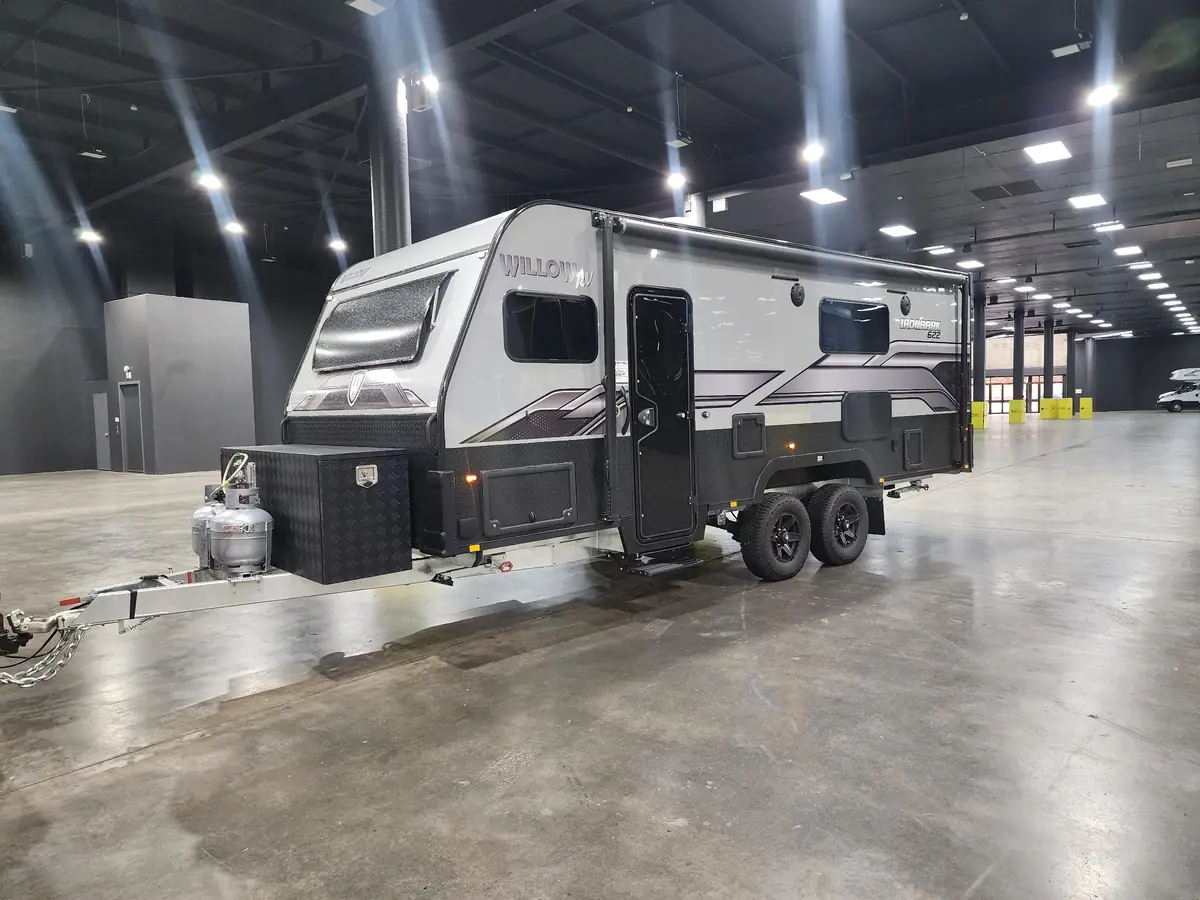
The name comes from the founders’ surnames, Wills and Jow, and every model is named after a tree.
- Conifer: semi off road, and the most popular in the range.
- Boab: off road.
- Ironbark: off road luxury, with a slide-out on every model.
- Waratah: off road, with an electric drop-down king size bed on every model.
- Illawarra: off road.
- Kauri: motorhome.
Set it up your way
Every Willow RV starts well equipped, and almost any extra can be added to suit how you travel. There is no fixed list. If it can go on a caravan, ask us. A few examples:
- Off-grid power: lithium batteries, solar, inverter chargers and battery management, sized to how you travel. We have delivered vans with 1,440W of solar and 800Ah of lithium, and we offer 48V systems for serious off-grid power.
- Kitchen and comfort: compressor fridges, portable induction cooking in place of the gas stove top, inverter air conditioning, a square kitchen sink or a LooSeal waterless toilet.
- Outdoor living: a slide-out kitchen with drawer fridge, external shower, extra outside lighting or an A-frame toolbox with slide.
- On the road: airbag suspension, disc brakes, 16 inch alloy wheels, reversing camera, front window protector shade or a Dometic dust reduction system.
- Your style: black hardware, matte cupboard doors, split door colours and more.
Whether you stay on powered sites or want a van set up for extended stays off-grid, tell us how you travel and we’ll spec your Willow RV to match. See the full Willow RV range.
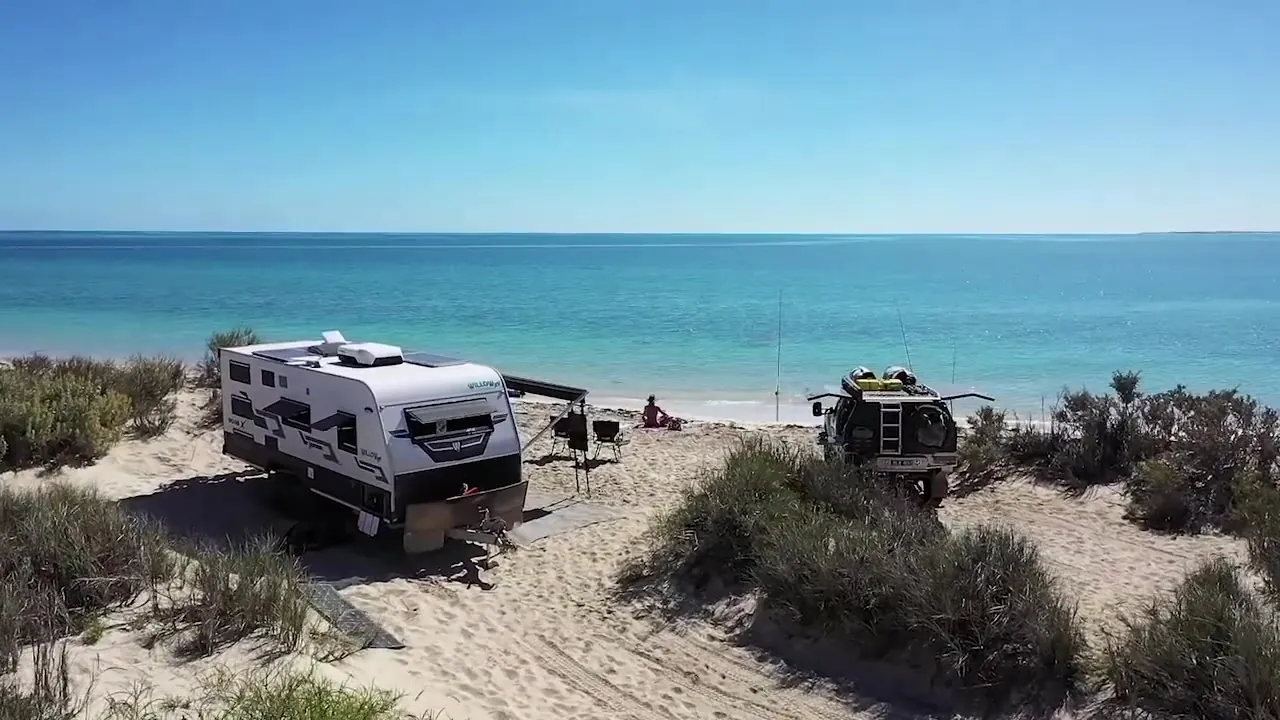
A caravan is only as good as your confidence in it. When the body is sealed, insulated and built to stay that way, you stop thinking about the van and start thinking about where to point it next.
Come and see how a Willow RV is built
Reading about it is one thing. Come and knock on the wall, open the cupboards and look underneath. Ask for a walk-through and we will show you the rail system, the corner seals and the hot dipped galvanised chassis in person.
Searle’s RV Centre, authorised Willow RV dealer in Queensland
Cnr Takalvan St & Enterprise St, Bundaberg QLD 4670
Monday to Friday 8am to 5pm, Saturday 8:30am to 12pm
Frequently asked questions
Where are Willow RV caravans built?
In Pakenham, Victoria. Willow RV is Australian owned, and its caravans are designed and built there.
What does “built inside out” mean?
The furniture is fixed to the floor and the wiring and plumbing are finished before the walls and roof go on.
What is inside a Willow RV wall?
A one-piece, aluminium-skinned composite panel with a closed-cell extruded foam core and a polyurethane rail system built into it. Polyurethane can’t absorb water. The wall panels are made in Australia.
What is the furniture made of?
Laminated poplar ply for the internal cupboards, along with composite furniture panels. Everything is CNC-cut so each piece interlocks with the next, and both materials are chosen because they are light and strong, which leaves more payload for your gear.
Why does a hot dipped galvanised chassis matter?
The chassis is welded first and then dipped in molten zinc, so the welds, edges and inside surfaces are all coated.
Can a composite caravan wall be repaired?
Yes. Searle’s RV Centre carries out insurance repairs on caravans, including composite wall repairs.
What warranty comes with a Willow RV?
A three-year manufacturer’s warranty on everything Willow RV builds. Appliances carry their own makers’ warranties, which vary by product.
Where can I see a Willow RV in Queensland?
At Searle’s RV Centre, Cnr Takalvan St & Enterprise St, Bundaberg. We are an authorised Willow RV dealer in Queensland.